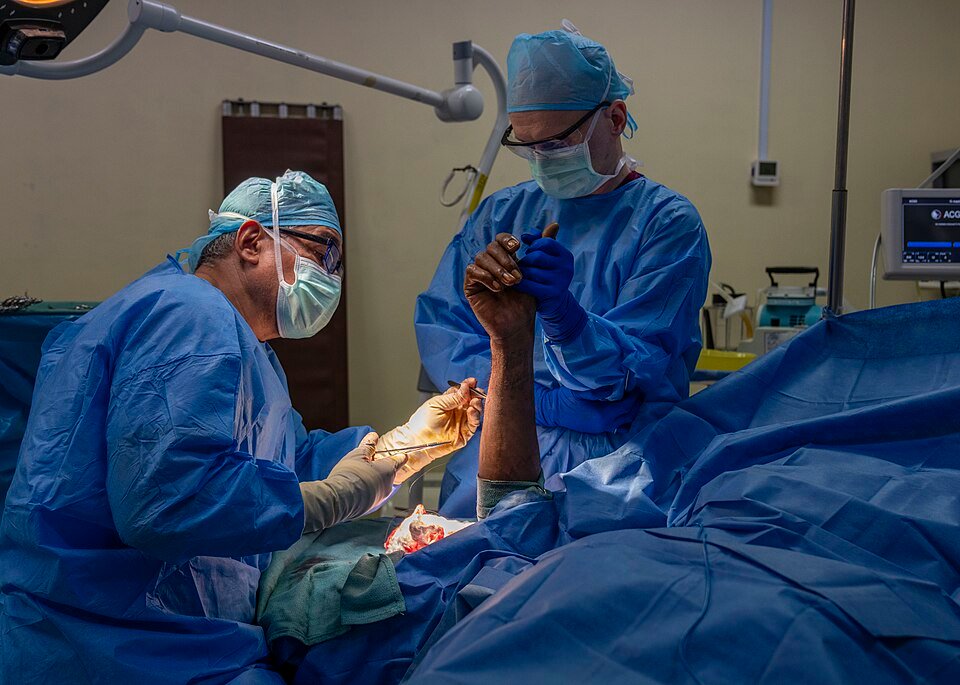
Treatment overview
Please contact Valve Hospitals to confirm the current availability of this surgical procedure. Where required, our specialists will guide you on referral options.
Joint replacement (arthroplasty) is considered when arthritis or joint damage causes severe pain and disability despite non-surgical treatment. Knee and hip replacements are the most common.
What the treatment involves
Damaged joint surfaces are removed and replaced with metal, plastic or ceramic components designed to move smoothly.
When it may be recommended
- Advanced osteoarthritis or rheumatoid arthritis
- Severe pain limiting walking and daily activities
- Failure of medicines, physiotherapy and injections
- Joint deformity
Related conditions: Osteoarthritis
How the procedure works
- Pre-operative assessment and anaesthesia evaluation
- Spinal or general anaesthesia
- Damaged surfaces replaced with implants
- Early mobilisation, often within a day
- Structured physiotherapy
Preparation
- Medical evaluation and optimisation of diabetes, blood pressure and anaemia
- Dental check to reduce infection risk
- Prepare your home for recovery
- Pre-operative exercises
Recovery and aftercare
- Walking with support soon after surgery
- Physiotherapy for several weeks
- Most people return to daily activities within weeks to months
Potential risks and considerations
- Infection
- Blood clots
- Implant loosening or wear over time
- Stiffness or persistent pain
- Anaesthesia risks
Your doctor will discuss the benefits, risks and alternatives specific to you before any procedure.
Relevant department
OrthopaedicsCare for bones, joints, muscles, ligaments and the spine — from injuries to arthritis.Relevant doctors
Frequently asked questions
Many modern knee and hip replacements function well for 15–20 years or longer.
Book an appointment
Discuss whether this surgical procedure is right for you with our orthopaedics team.